
Home
>
News
>
Industry News
>
Development Trends of VOCs Waste Gas Treatment Technology in the Environmental Protection Industry
Development Trends of VOCs Waste Gas Treatment Technology in the Environmental Protection Industry
2026/06/11
VOCs waste gas treatment technology is rapidly evolving towards six core directions: high efficiency, low carbon emissions, intelligentization, resource utilization, integration, and source control. Driven by both policy and market forces, single, inefficient technologies are being phased out, while combined processes and whole-chain treatment are becoming mainstream.
I. High Efficiency: From "Meeting Standards" to "Ultra-Clean + Stable"
Mainstream Process Upgrades: In low-concentration, high-volume scenarios, zeolite rotor + RTO/CO is the absolute mainstream, with a stable removal rate ≥98%; in high-concentration scenarios, energy-saving RTO is used, with a thermal efficiency ≥95%.
Material Revolution:
1. Adsorption Materials: Modified zeolite, MOFs, and activated carbon fiber composites increase adsorption capacity by 50%+, significantly enhancing moisture resistance, temperature resistance, and poisoning resistance.
2. Catalytic Materials: Non-precious metals (manganese-based, cobalt-based, perovskite) replace precious metals, reducing ignition temperature to 180–250℃, lowering costs by 70%, and extending lifespan to ≥8000 hours.
3. Clear Elimination: Single photocatalysis, low-temperature plasma, and photo-oxidation are classified as inefficient technologies and are only permitted for auxiliary treatment of malodorous substances.
II. Low-Carbonization: From "Energy Consumption" to "Carbon Reduction + Energy Recovery"
1. Deep Utilization of Waste Heat: RTO/RCO waste heat is used for process heating, boiler feedwater, or for power generation via ORC, with heat recovery efficiency ≥95% and overall energy consumption reduced by 30%+.
2. Widespread Adoption of Low-Energy Routes:
2.1 Low-temperature catalytic combustion (CO) replaces high-temperature incineration, reducing energy consumption by 50%.
2.2 Biological Enhancement (genetically engineered strains, composite packing materials) achieves a VOCs treatment efficiency of 93%+, with energy consumption only 1/10 of that of combustion methods.
3. Coordinated Pollution Reduction and Carbon Reduction: Grade A performance requires the treatment system to operate for ≥8000 hours annually, with simultaneous carbon emission reduction calculations, incorporated into environmental tax and subsidy policies.
III. Intelligentization: From "Manual Operation and Maintenance" to "AI Autonomous Control"
1. Digital Twin + AI Optimization: IoT real-time collection of concentration, flow rate, and temperature; machine learning dynamically adjusts impeller speed, RTO switching cycle, and regeneration frequency, reducing energy consumption by 10%–30% and operation and maintenance costs by 40%.
2. Full Coverage of Online Monitoring: FID/PID/FTIR network connectivity, data effectiveness ≥90%, automatic early warning of abnormal emissions, and source tracing accuracy ≥80%.
3. Intelligent Operation and Maintenance: Equipment health diagnosis, remote control, predictive maintenance, with an online rate ≥98.7%. IV. Resource Utilization: From "Destruction" to "Recycling + High-Value Conversion"
1. Mainstream Solvent Recovery: A combination of condensation and adsorption/membrane separation achieves a high-value solvent (toluene, ethyl acetate) recovery rate of ≥90%, directly reused in production, with annual revenue covering operation and maintenance costs.
2. High-Value VOCs Conversion: Catalytic hydrogenation to methanol and methane, or as a carbon source for chemical synthesis, realizing "waste gas to raw material."
3. Hazardous Waste Reduction: In-situ regeneration of adsorbents and extended catalyst lifespan reduce hazardous waste generation by 60%+.
V. Integration: From "Single Equipment" to "Modular + Industrial Park"
1. Standardized Modules: Zeolite rotor + CO/RTO integrated unit, shortening installation time by 60%, adaptable to small and medium-sized plant spaces, and flexible expansion.
2. Multi-Process Coupling: Integrated pretreatment + adsorption concentration + combustion + waste heat recovery + intelligent control, simultaneously addressing VOCs, odors, particulate matter, and dioxins.
3. Centralized Industrial Park Treatment: Shared RTO and centralized adsorption facilities reduce per-ton treatment costs by 30% due to economies of scale, making it a policy-encouraged direction.
VI. Source Control: From "End-of-Pipe Treatment" to "Full-Process Emission Reduction"
1. Accelerated Source Substitution: The adoption rate of low-VOCs coatings, water-based inks, and solvent-free adhesives is expected to exceed 40% by 2026, reducing emissions by 50%+ at the source.
2. Enhanced Process Control: Closed negative pressure collection and full coverage of LDAR (Leak Detection and Reduction) systems, with a collection rate ≥80%, prevent fugitive emissions.
3. Co-treatment of Water and Air: Waste heat from waste gas treatment is used for wastewater treatment, and wastewater reuse replaces fresh water, achieving resource recycling.
VII. Trends in Technology Selection (Mainstream in 2026)
| Waste Gas Characteristics | Preferred Technology | Core Advantages |
| Low Concentration, High Volume (Printing, Coating) | Zeolite Rotor + RTO/CO | Efficiency ≥98%, Low Energy Consumption, Stable Compliance |
| Medium-High Concentration (Chemical, Petrochemical) | Energy Saving RTO + Waste Heat Recovery | Thermal Efficiency ≥95%, Significant Carbon Reduction |
| High-Value Solvents (Pharmaceutical, Coating) | Condensation + Adsorption / Membrane Separation | Recovery Rate ≥90%, Good Economic Benefits |
| Low Concentration, Easily Degradable (Food, Pharmaceutical) | Intelligent Biological Method | Low Energy Consumption, No Secondary Pollution, Low Cost |
| Complex Mixed Waste Gas | Multi-Process Coupling (Pretreatment + Concentration + Combustion) | Strong Adaptability, One-Stop Solution |
VIII. The following are some VOCs treatment processes and on-site images for various industries:
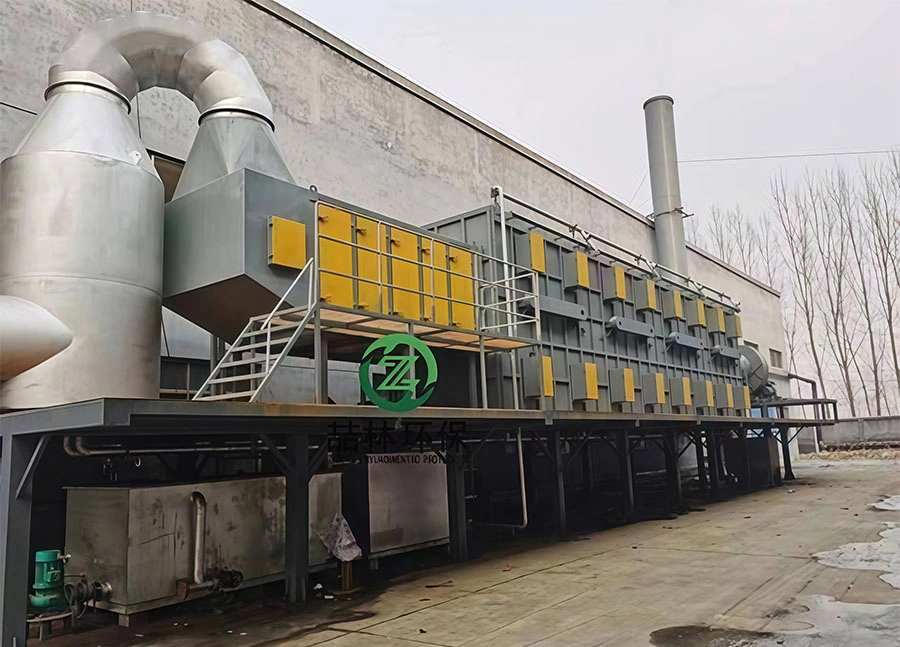
1. Jiaxing Precision Casting Factory: Zeolite Rotor + Catalytic Combustion: On-site long strip-shaped treatment unit, equipped with pipelines and chimney, non-methane total hydrocarbons are stably below 20mg/m³.
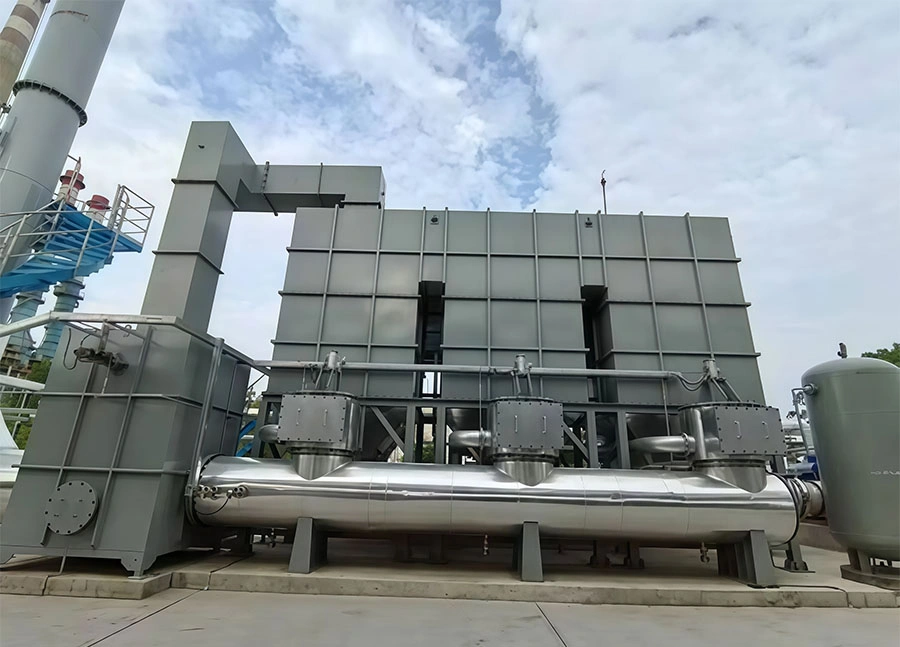
2. Yangzhou Chemical Industrial Park RTO Main Equipment: A large-scale three-chamber RTO system, including a heat storage chamber, switching valve group, and online monitoring instruments, is used for the treatment of high-concentration chemical waste gas.
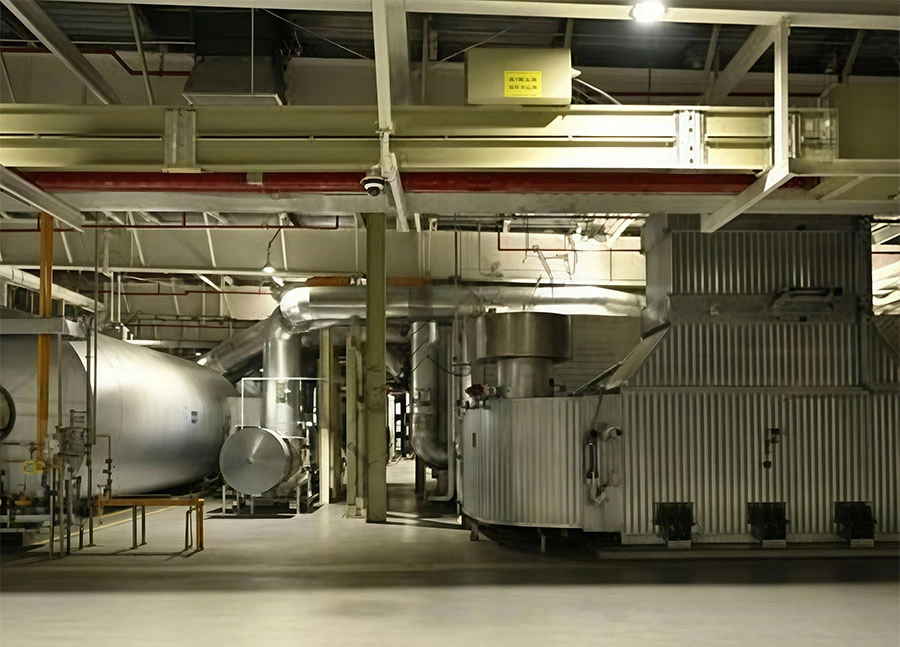
3. SAIC Volkswagen MEB Plant Painting Exhaust Gas Terminal Treatment Area: The rotary wheel + RTO integrated system in the automotive painting workshop, combined with circulating air technology, significantly reduces energy consumption.
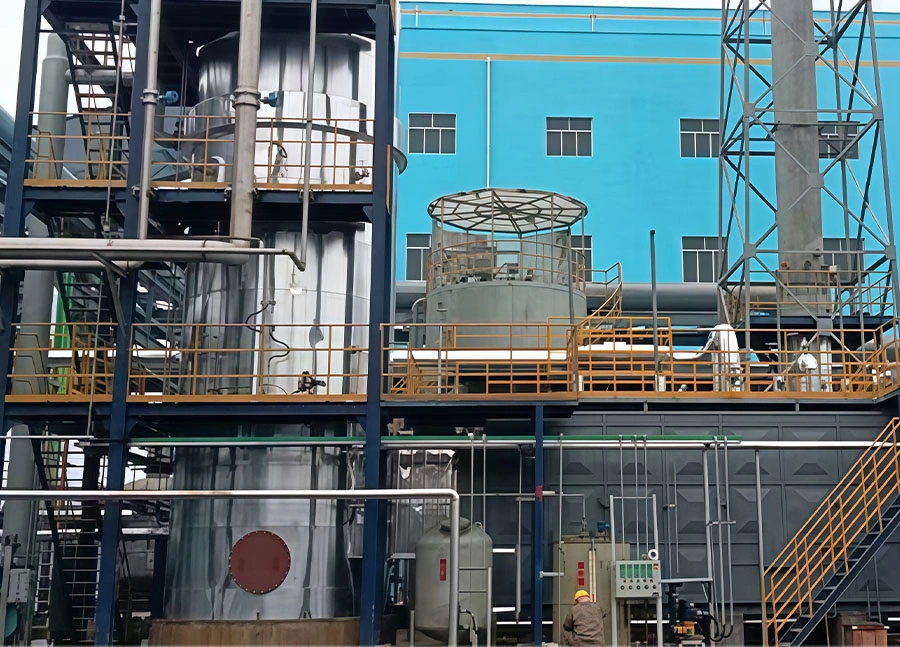
4. Energy-Saving RTO (High-Concentration Chemical/Pharmaceutical): An independent large-scale incinerator and towering exhaust stack, equipped with a waste heat recovery heat exchanger, achieving a thermal efficiency of over 95%, enabling self-sustaining combustion of high-concentration waste gas.
IX. Summary
By 2026, VOCs treatment technology has entered a high-quality development stage of "high efficiency, low carbon, intelligence, and circularity." Enterprises need to prioritize combined processes + intelligent control + energy recovery solutions, simultaneously promoting source substitution and process control, in order to meet the multiple requirements of A-level performance, environmental tax, and carbon emission reduction.