
Products
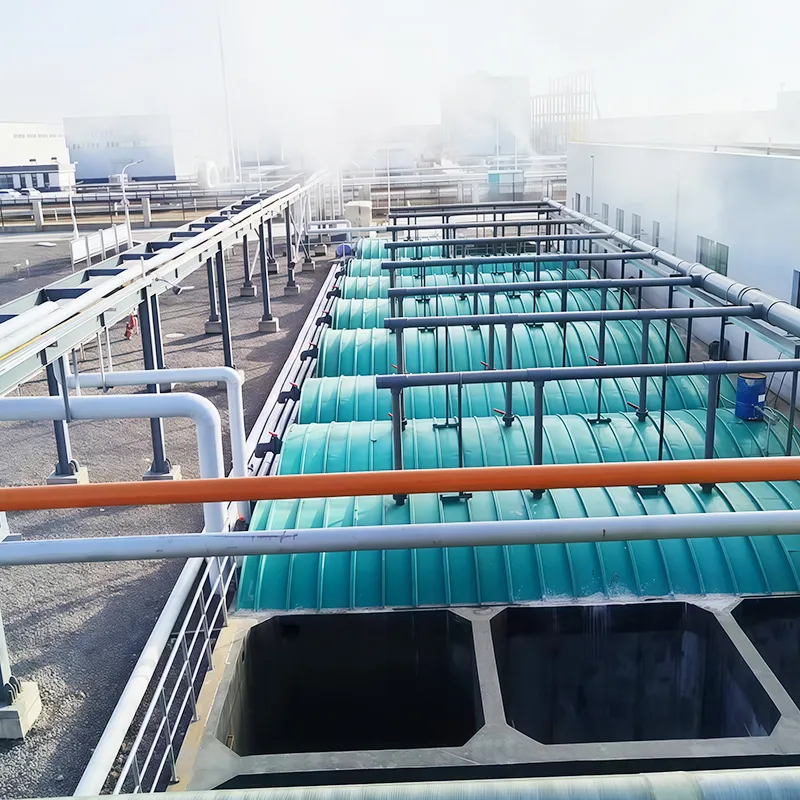

Integrated Domestic Sewage Treatment Plant
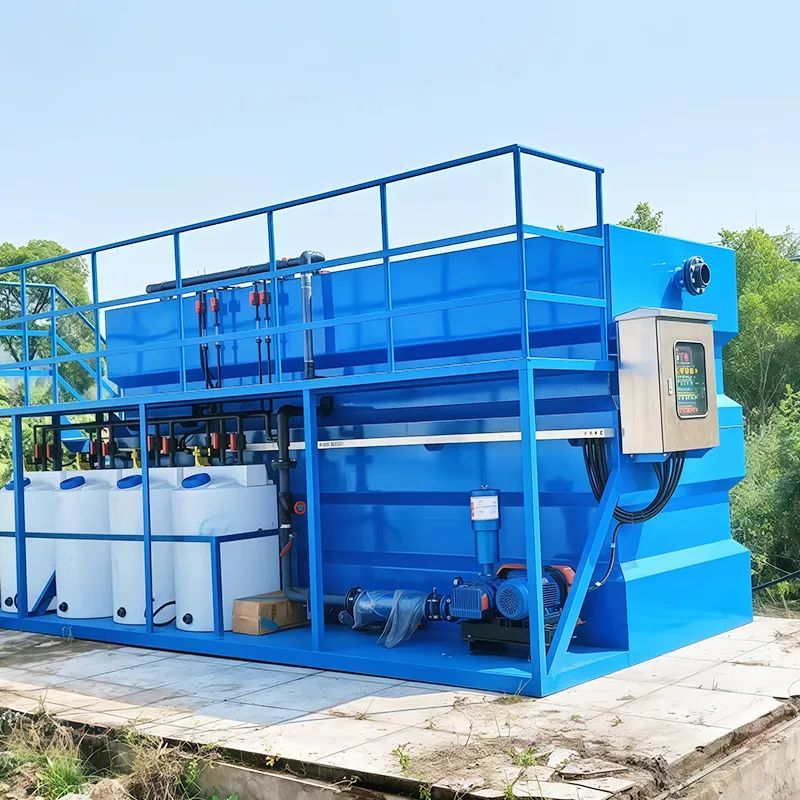
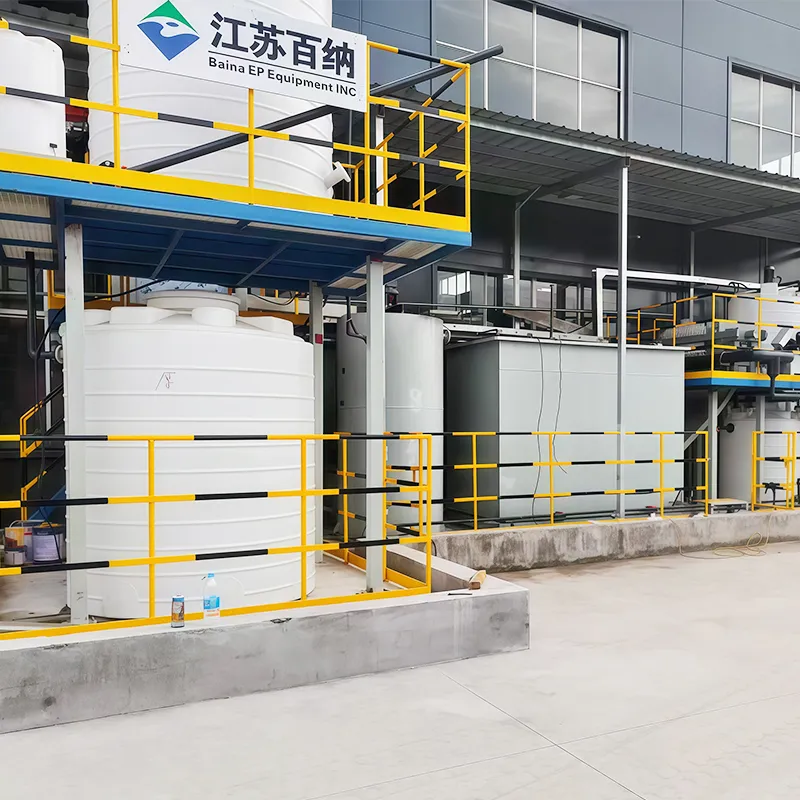
Our Integrated Domestic Sewage Treatment Plant is a compact, efficient, and cost-effective turnkey solution engineered for the comprehensive treatment of municipal, industrial, and decentralized sewage. Designed to address the pain points of traditional wastewater treatment—including large footprint, complex installation, long construction cycles, and high operational costs—this prefabricated integrated system integrates pre-treatment, biological degradation, sedimentation, disinfection, and sludge treatment into a single modular unit. It leverages advanced biological and physical-chemical technologies to efficiently remove organic pollutants, nitrogen, phosphorus, suspended solids (TSS), and pathogens, ensuring stable compliance with global strict environmental standards such as ISO 30500:2018, EU Urban Wastewater Treatment Directive (EU 2024/3019), US EPA Effluent Guidelines, and regional regulations worldwide.
Product Description
Our Integrated Domestic Sewage Treatment Plant is a compact, efficient, and cost-effective turnkey solution engineered for the comprehensive treatment of municipal, industrial, and decentralized sewage. Designed to address the pain points of traditional wastewater treatment—including large footprint, complex installation, long construction cycles, and high operational costs—this prefabricated integrated system integrates pre-treatment, biological degradation, sedimentation, disinfection, and sludge treatment into a single modular unit. It leverages advanced biological and physical-chemical technologies to efficiently remove organic pollutants, nitrogen, phosphorus, suspended solids (TSS), and pathogens, ensuring stable compliance with global strict environmental standards such as ISO 30500:2018, EU Urban Wastewater Treatment Directive (EU 2024/3019), US EPA Effluent Guidelines, and regional regulations worldwide.
Unlike conventional decentralized treatment systems that require separate installation of multiple components and extensive on-site civil work, our integrated device is fully prefabricated, tested, and assembled in the factory—ready for "plug-and-play" deployment. It is highly versatile, adapting to diverse sewage types (domestic sewage, food processing wastewater, hospital sewage, and low-concentration industrial effluent) and scenarios (remote areas, urban communities, industrial parks, tourist attractions, and emergency treatment). With its compact design, intelligent operation, and low maintenance requirements, it provides enterprises, communities, and project operators with a reliable, sustainable solution for sewage treatment, water reuse, and environmental compliance, aligning with global circular economy and water conservation goals.
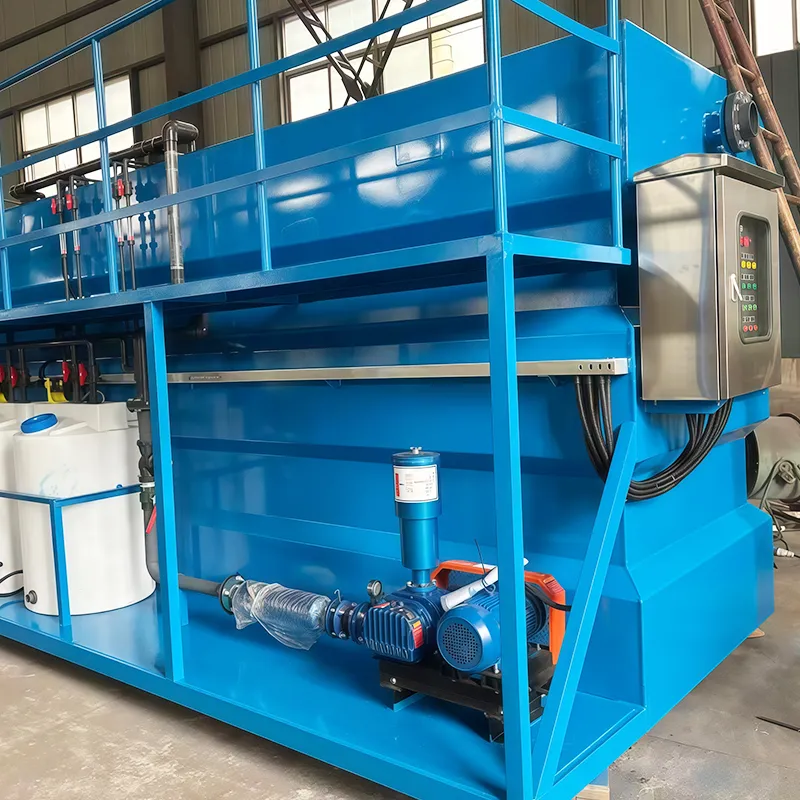
Unlike conventional decentralized treatment systems that require separate installation of multiple components and extensive on-site civil work, our integrated device is fully prefabricated, tested, and assembled in the factory—ready for "plug-and-play" deployment. It is highly versatile, adapting to diverse sewage types (domestic sewage, food processing wastewater, hospital sewage, and low-concentration industrial effluent) and scenarios (remote areas, urban communities, industrial parks, tourist attractions, and emergency treatment). With its compact design, intelligent operation, and low maintenance requirements, it provides enterprises, communities, and project operators with a reliable, sustainable solution for sewage treatment, water reuse, and environmental compliance, aligning with global circular economy and water conservation goals.
Product Feature
Core Working Principle
The Integrated Domestic Sewage Treatment Plant operates through a synergistic multi-stage process, combining physical screening, biological degradation, sedimentation, and disinfection to achieve thorough purification. All processes are integrated into a single compact unit, ensuring efficient coordination between each stage and stable treatment performance, even under fluctuating sewage flow and quality:
1.Pre-Treatment Stage: Raw sewage first enters the pre-treatment unit, where large particles, floating debris, grease, and grit are removed through screening and grit separation. This step protects downstream components from clogging and damage, while adjusting the sewage’s pH, temperature, and water quantity to create an optimal environment for subsequent biological treatment. It effectively reduces the load on the biological system and ensures stable operation .
2.Biological Degradation Stage: The pre-treated sewage flows into the biological reaction zone, which adopts advanced technologies such as AO (Anaerobic-Oxic), MBBR (Moving Bed Biofilm Reactor), or MBR (Membrane Bioreactor). Specially selected aerobic and anaerobic microorganisms degrade organic pollutants (BOD, COD) through metabolic activities: anaerobic microorganisms break down complex organic matter into small-molecule intermediates, while aerobic microorganisms further oxidize these intermediates into harmless CO₂ and H₂O. Through nitrification and denitrification, nitrogen compounds are converted into nitrogen gas, and phosphorus is assimilated or precipitated for removal—achieving high-efficiency nitrogen and phosphorus removal.
3.Sedimentation & Sludge Treatment Stage: After biological treatment, the sewage enters the sedimentation tank, where microbial flocs (activated sludge) and suspended solids settle to the bottom. A portion of the sludge is recycled back to the biological reaction zone to maintain a stable microbial community, while excess sludge is concentrated and dewatered within the unit. The dewatered sludge has a reduced volume (70–80% reduction) and is biodegradable, making it easy to dispose of or reuse as organic fertilizer.
4.Disinfection & Advanced Polishing Stage: The clarified water undergoes disinfection (ultraviolet or ozone disinfection) to eliminate pathogens such as bacteria and viruses, ensuring the treated water meets safety standards for discharge or reuse . For applications requiring higher water quality (e.g., irrigation, industrial reuse), an optional advanced polishing unit (filtration, membrane separation) is available to remove residual trace pollutants, achieving water reuse rates of up to 85% .
Key Product Advantages
1.Compact & Space-Saving: All treatment processes are integrated into a single modular unit, with a footprint 30–50% smaller than traditional treatment systems (0.3–0.6 m²/(m³/d) vs. 0.8–1.5 m²/(m³/d) for conventional plants). It can be installed underground, allowing the surface area to be used for green space, parking lots, or plazas—ideal for urban areas, tourist attractions, and sites with limited land.
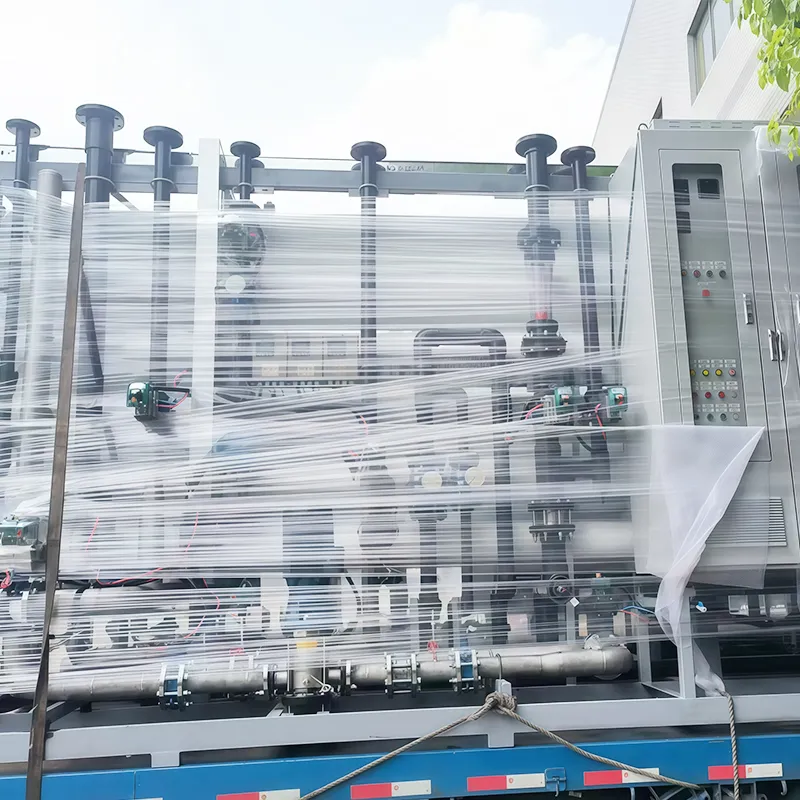
2.Rapid Deployment & Easy Installation: Fully prefabricated and factory-tested, the device requires minimal on-site civil work. It can be quickly assembled and commissioned within 1–3 months (vs. 6–12 months for traditional plants), reducing installation time and costs significantly. The containerized design also facilitates easy transportation, making it suitable for remote areas and emergency projects.
3.High Purification Efficiency: Integrates advanced biological and physical-chemical technologies, with COD/BOD removal rates up to 95%, ammonia nitrogen removal rate ≥90%, phosphorus removal rate ≥85%, and TSS removal rate ≥98%. It effectively meets stringent international standards, including EU’s upcoming 2036 requirement of total nitrogen ≤6 mg/L and total phosphorus ≤0.5 mg/L .
4.Intelligent & Low Maintenance: Equipped with a PLC intelligent control system and IoT monitoring module, it accomplish automatic water intake, aeration control, sludge recycling, disinfection, and fault alarm. It supports 24-hour unattended operation, with maintenance required only once every 1–3 months—reducing manual management costs by 60% compared to traditional systems .
5.Energy-Saving & Cost-Effective: Adopts energy-efficient aeration systems, sludge recycling technology, and optional biogas recovery (from anaerobic treatment) for energy reuse—reducing energy consumption by 20–30%. The initial investment is 20–30% lower than traditional treatment plants, and the annual operating cost is 0.8–1.5 yuan/m³, with a short investment recovery period of 3–5 years .
6.Strong Adaptability & Versatility: Suitable for diverse sewage types, including domestic sewage, food processing wastewater, hospital sewage, and low-concentration industrial effluent. It can handle flow rates from 5 m³/d to 5000 m³/d and adapt to large fluctuations in sewage concentration (COD: 200–5000 mg/L), making it ideal for decentralized treatment and industrial parks .
7.Environmentally Friendly & Zero Secondary Pollution: Uses naturally occurring microorganisms for degradation, minimizing the need for chemical additives. The treated effluent is non-toxic and harmless, and the dewatered sludge is biodegradable—avoiding secondary pollution. It also supports water reuse, reducing reliance on fresh water and aligning with global sustainability goals .
8.Durable & Reliable: The main structure is made of corrosion-resistant materials (carbon steel, FRP, or stainless steel) complying with international ISO standards, ensuring long service life (≥15 years). It is equipped with multiple safety protection systems (over-temperature, over-current, leakage detection) and anti-odor design, ensuring stable operation in harsh environments .
9.Global Compliance & Customization: Fully complies with ISO 30500:2018, EU, US EPA, and regional emission standards. We provide customized solutions tailored to the specific sewage characteristics and emission requirements of different countries and regions, including high-standard projects (e.g., COD ≤30 mg/L, BOD5 ≤3 mg/L) and emergency treatment scenarios .
Typical Applications
Our Integrated Domestic Sewage Treatment Plant is widely used in decentralized, municipal, and industrial scenarios, particularly in areas with limited space, remote locations, or urgent treatment needs. Typical applications include:
1.Municipal & Decentralized Sewage: Residential communities, villages, towns, and rural areas (addressing insufficient pipe network coverage); urban pipe network end interception and sewage plant expansion/renovation .
2.Tourism & Service Industry: Tourist attractions, hotels, resorts, highways, and railway service areas—where space is limited and landscape coordination is required. The underground installation design ensures no impact on the surrounding environment.
3.Food & Beverage Industry: Small and medium-sized food processing, brewing, and aquatic product processing enterprises—treating high-BOD/COD wastewater and achieving oil recovery and water reuse .
4.Healthcare & Public Facilities: Hospitals, schools, sanatoriums, and military bases—treating sewage containing pathogens and ensuring disinfection compliance (fecal coliform ≤100–1000 CFU/L) .
5.Industrial Parks & Small Factories: Centralized treatment of mixed wastewater from multiple small enterprises, or standalone treatment for low-concentration industrial effluent (e.g., electronics, textile, and light industry) .
6.Emergency & Temporary Treatment: Disaster relief, construction sites, and temporary settlements—rapidly deployed to handle sudden sewage discharge and ensure environmental safety .
Why Choose Our Integrated Domestic Sewage Treatment Plant?
As a professional manufacturer of integrated wastewater treatment solutions, we specialize in the R&D, production, and customization of prefabricated Integrated Domestic Sewage Treatment Plants. We integrate international advanced biological technology, membrane separation technology, and intelligent control systems, with rich engineering experience in global projects—including high-standard projects in Russia and other regions . Our team provides one-stop services from scheme design, equipment manufacturing, on-site installation, to after-sales maintenance, tailoring solutions to meet the unique needs of each customer.
Our integrated device has been exported to dozens of countries and regions, winning wide recognition for its compact design, high efficiency, energy saving, and reliability. In an era of increasingly stringent environmental regulations and growing demand for decentralized sewage treatment, our solution helps customers achieve environmental compliance, reduce operational costs, and enhance their ESG performance. Choosing our Integrated Domestic Sewage Treatment Plant is your reliable guarantee for efficient, sustainable, and cost-effective sewage treatment, whether for municipal, industrial, or emergency scenarios.
The Integrated Domestic Sewage Treatment Plant operates through a synergistic multi-stage process, combining physical screening, biological degradation, sedimentation, and disinfection to achieve thorough purification. All processes are integrated into a single compact unit, ensuring efficient coordination between each stage and stable treatment performance, even under fluctuating sewage flow and quality:
1.Pre-Treatment Stage: Raw sewage first enters the pre-treatment unit, where large particles, floating debris, grease, and grit are removed through screening and grit separation. This step protects downstream components from clogging and damage, while adjusting the sewage’s pH, temperature, and water quantity to create an optimal environment for subsequent biological treatment. It effectively reduces the load on the biological system and ensures stable operation .
2.Biological Degradation Stage: The pre-treated sewage flows into the biological reaction zone, which adopts advanced technologies such as AO (Anaerobic-Oxic), MBBR (Moving Bed Biofilm Reactor), or MBR (Membrane Bioreactor). Specially selected aerobic and anaerobic microorganisms degrade organic pollutants (BOD, COD) through metabolic activities: anaerobic microorganisms break down complex organic matter into small-molecule intermediates, while aerobic microorganisms further oxidize these intermediates into harmless CO₂ and H₂O. Through nitrification and denitrification, nitrogen compounds are converted into nitrogen gas, and phosphorus is assimilated or precipitated for removal—achieving high-efficiency nitrogen and phosphorus removal.
3.Sedimentation & Sludge Treatment Stage: After biological treatment, the sewage enters the sedimentation tank, where microbial flocs (activated sludge) and suspended solids settle to the bottom. A portion of the sludge is recycled back to the biological reaction zone to maintain a stable microbial community, while excess sludge is concentrated and dewatered within the unit. The dewatered sludge has a reduced volume (70–80% reduction) and is biodegradable, making it easy to dispose of or reuse as organic fertilizer.
4.Disinfection & Advanced Polishing Stage: The clarified water undergoes disinfection (ultraviolet or ozone disinfection) to eliminate pathogens such as bacteria and viruses, ensuring the treated water meets safety standards for discharge or reuse . For applications requiring higher water quality (e.g., irrigation, industrial reuse), an optional advanced polishing unit (filtration, membrane separation) is available to remove residual trace pollutants, achieving water reuse rates of up to 85% .
Key Product Advantages
1.Compact & Space-Saving: All treatment processes are integrated into a single modular unit, with a footprint 30–50% smaller than traditional treatment systems (0.3–0.6 m²/(m³/d) vs. 0.8–1.5 m²/(m³/d) for conventional plants). It can be installed underground, allowing the surface area to be used for green space, parking lots, or plazas—ideal for urban areas, tourist attractions, and sites with limited land.
2.Rapid Deployment & Easy Installation: Fully prefabricated and factory-tested, the device requires minimal on-site civil work. It can be quickly assembled and commissioned within 1–3 months (vs. 6–12 months for traditional plants), reducing installation time and costs significantly. The containerized design also facilitates easy transportation, making it suitable for remote areas and emergency projects.
3.High Purification Efficiency: Integrates advanced biological and physical-chemical technologies, with COD/BOD removal rates up to 95%, ammonia nitrogen removal rate ≥90%, phosphorus removal rate ≥85%, and TSS removal rate ≥98%. It effectively meets stringent international standards, including EU’s upcoming 2036 requirement of total nitrogen ≤6 mg/L and total phosphorus ≤0.5 mg/L .
4.Intelligent & Low Maintenance: Equipped with a PLC intelligent control system and IoT monitoring module, it accomplish automatic water intake, aeration control, sludge recycling, disinfection, and fault alarm. It supports 24-hour unattended operation, with maintenance required only once every 1–3 months—reducing manual management costs by 60% compared to traditional systems .
5.Energy-Saving & Cost-Effective: Adopts energy-efficient aeration systems, sludge recycling technology, and optional biogas recovery (from anaerobic treatment) for energy reuse—reducing energy consumption by 20–30%. The initial investment is 20–30% lower than traditional treatment plants, and the annual operating cost is 0.8–1.5 yuan/m³, with a short investment recovery period of 3–5 years .
6.Strong Adaptability & Versatility: Suitable for diverse sewage types, including domestic sewage, food processing wastewater, hospital sewage, and low-concentration industrial effluent. It can handle flow rates from 5 m³/d to 5000 m³/d and adapt to large fluctuations in sewage concentration (COD: 200–5000 mg/L), making it ideal for decentralized treatment and industrial parks .
7.Environmentally Friendly & Zero Secondary Pollution: Uses naturally occurring microorganisms for degradation, minimizing the need for chemical additives. The treated effluent is non-toxic and harmless, and the dewatered sludge is biodegradable—avoiding secondary pollution. It also supports water reuse, reducing reliance on fresh water and aligning with global sustainability goals .
8.Durable & Reliable: The main structure is made of corrosion-resistant materials (carbon steel, FRP, or stainless steel) complying with international ISO standards, ensuring long service life (≥15 years). It is equipped with multiple safety protection systems (over-temperature, over-current, leakage detection) and anti-odor design, ensuring stable operation in harsh environments .
9.Global Compliance & Customization: Fully complies with ISO 30500:2018, EU, US EPA, and regional emission standards. We provide customized solutions tailored to the specific sewage characteristics and emission requirements of different countries and regions, including high-standard projects (e.g., COD ≤30 mg/L, BOD5 ≤3 mg/L) and emergency treatment scenarios .
Typical Applications
Our Integrated Domestic Sewage Treatment Plant is widely used in decentralized, municipal, and industrial scenarios, particularly in areas with limited space, remote locations, or urgent treatment needs. Typical applications include:
1.Municipal & Decentralized Sewage: Residential communities, villages, towns, and rural areas (addressing insufficient pipe network coverage); urban pipe network end interception and sewage plant expansion/renovation .
2.Tourism & Service Industry: Tourist attractions, hotels, resorts, highways, and railway service areas—where space is limited and landscape coordination is required. The underground installation design ensures no impact on the surrounding environment.
3.Food & Beverage Industry: Small and medium-sized food processing, brewing, and aquatic product processing enterprises—treating high-BOD/COD wastewater and achieving oil recovery and water reuse .
4.Healthcare & Public Facilities: Hospitals, schools, sanatoriums, and military bases—treating sewage containing pathogens and ensuring disinfection compliance (fecal coliform ≤100–1000 CFU/L) .
5.Industrial Parks & Small Factories: Centralized treatment of mixed wastewater from multiple small enterprises, or standalone treatment for low-concentration industrial effluent (e.g., electronics, textile, and light industry) .
6.Emergency & Temporary Treatment: Disaster relief, construction sites, and temporary settlements—rapidly deployed to handle sudden sewage discharge and ensure environmental safety .
Why Choose Our Integrated Domestic Sewage Treatment Plant?
As a professional manufacturer of integrated wastewater treatment solutions, we specialize in the R&D, production, and customization of prefabricated Integrated Domestic Sewage Treatment Plants. We integrate international advanced biological technology, membrane separation technology, and intelligent control systems, with rich engineering experience in global projects—including high-standard projects in Russia and other regions . Our team provides one-stop services from scheme design, equipment manufacturing, on-site installation, to after-sales maintenance, tailoring solutions to meet the unique needs of each customer.
Our integrated device has been exported to dozens of countries and regions, winning wide recognition for its compact design, high efficiency, energy saving, and reliability. In an era of increasingly stringent environmental regulations and growing demand for decentralized sewage treatment, our solution helps customers achieve environmental compliance, reduce operational costs, and enhance their ESG performance. Choosing our Integrated Domestic Sewage Treatment Plant is your reliable guarantee for efficient, sustainable, and cost-effective sewage treatment, whether for municipal, industrial, or emergency scenarios.
Send Inquiry
Please feel free to give your inquiry in the form below. We will reply you in 24 hours.